
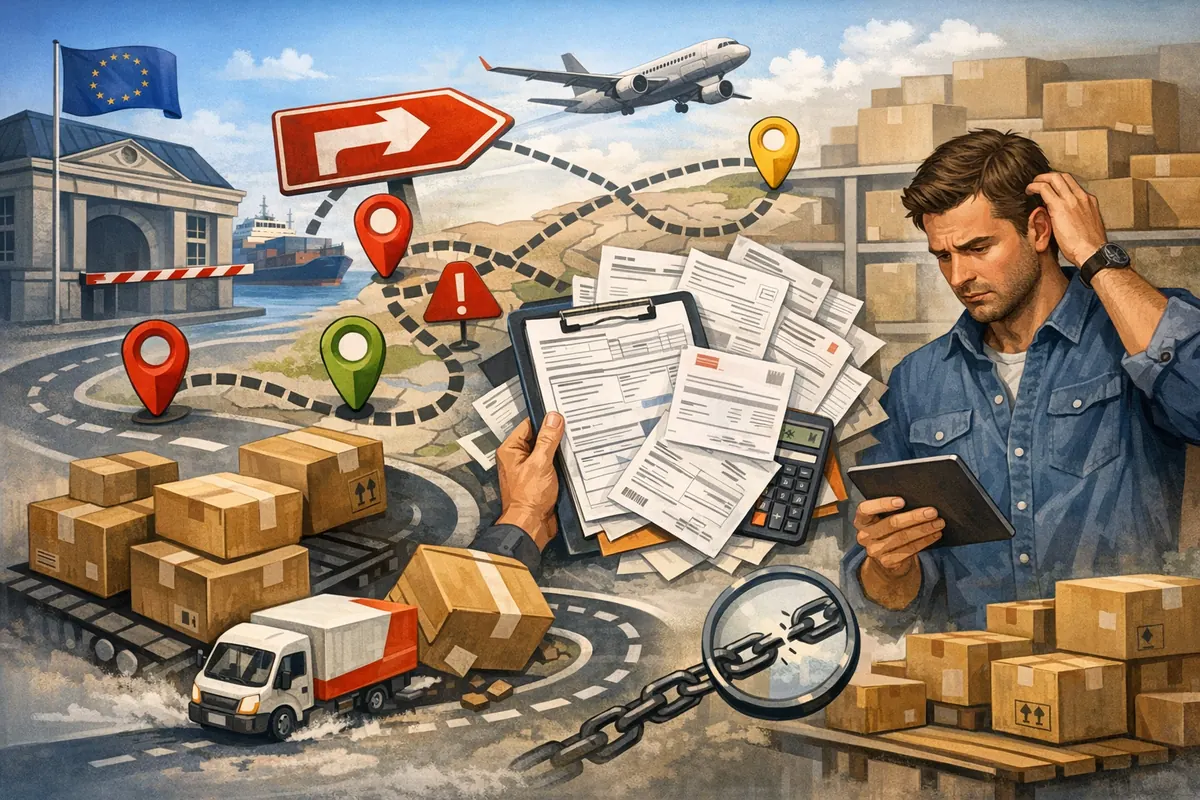
Dropshipping looks simple from the outside: the customer places an order, the supplier ships it, and the seller never touches the goods. The VAT side gets harder the moment the real fulfilment pattern changes and nobody updates the bookkeeping logic.
IOSS can work well in dropshipping, but only when the facts stay clean. The seller needs to know where the goods were dispatched from, whether the parcel stayed within the EUR 150 limit, and whether the marketplace or the seller collected the VAT. If one of those facts moves, the old setup may no longer fit.
The mistakes I see over and over again
- Assuming IOSS applies just because the business calls itself dropshipping.
- Not noticing that the supplier began shipping some orders from an EU warehouse.
- Leaving marketplace-collected VAT orders in the same bucket as seller-collected orders.
- Reviewing only payout totals instead of order-level dispatch data.
These mistakes are common because the owner is focused on ads, product testing, and delivery speed while the tax facts are changing in the background.
Why route changes are so dangerous
A short scenario shows the problem. In January a supplier ships a product from China directly to customers in Spain and Italy, so IOSS may fit. In March the same supplier starts sending the bestseller from a Polish warehouse to speed up delivery. The product page and checkout may look identical, but the VAT treatment is no longer the same.
That is why I ask owners to check the actual dispatch path, not the marketing description of the model. Once fulfilment starts running through the EU, or once a marketplace takes over VAT collection, you are no longer dealing with the same transaction type as before.
What to check every month
A monthly review is enough for many small businesses, but it has to be tied to real operational signals. Before closing the month, I want founders to check where the goods were dispatched from, whether any orders moved through EU stock, whether any parcels crossed the EUR 150 limit, and whether the marketplace changed the VAT role.
| Signal | Why it matters | What to do next |
|---|---|---|
| Supplier ships from a new country | The previous IOSS logic may no longer match the dispatch pattern | Review the VAT treatment before the next batch of orders |
| Orders start moving through EU stock | IOSS may stop being the right regime for those orders | Separate them and check whether local or OSS logic now applies |
| Marketplace collects VAT | The seller role may have changed on that transaction | Keep those orders out of the self-collected IOSS bucket |
| Orders above EUR 150 appear | They sit outside the normal IOSS flow | Mark them immediately for separate review |
If one of those signals appears, review the setup in the same month. Waiting until quarter end usually means the accountant receives a mixed order file and has to separate the flows after the fact.
The accountant handoff should be simple but precise. The monthly export needs at least dispatch country, order value, marketplace VAT flag, refund or reshipment note, and one comment for unusual orders. Without that, the accountant sees turnover but not the VAT facts behind it.
How the owner should manage the process
The owner does not need a weekly tax briefing. What the owner does need is one clear operating rule: if the dispatch country changes, if the marketplace starts collecting VAT, or if higher-value orders appear, those orders must be reviewed before they are treated as normal IOSS sales.
That rule is often enough to keep a small business out of trouble. The safest setup is not expensive software from day one. It is one person who checks dispatch patterns monthly and one accountant who receives the result in a usable export instead of a payout summary.
Dropshipping becomes risky when the supplier, platform, and accountant are all looking at different versions of the same order flow. Monthly dispatch checks keep those views aligned.
Dropshipping works cleanly only when dispatch path, seller role, and VAT collection still match the bookkeeping. As soon as those stop matching, the business needs a review instead of another month of assumptions.
If you need to separate true IOSS orders from EU-warehouse orders or marketplace-collected orders, contact us. We can map the fulfilment pattern, define the monthly export, and show your accountant which orders should stay in IOSS and which should not.
Sources cited in this article
Need help with IOSS for dropshipping? We work with Estonian founders, e-residents, and online stores that need a clean VAT setup. Contact us if you need the dispatch logic cleaned up and the monthly order export prepared properly for accounting.
Frequently asked questions
What should I prepare first for IOSS dropshipping Estonia?
Start with source documents, deadlines, and one named owner for the review step. That removes most last-minute confusion.
When should management get involved?
Management should step in before the deadline week, when the scope, exceptions, and approvals can still be corrected without stress.
What causes the biggest delays?
The biggest delays usually come from unclear responsibility, incomplete supporting documents, and issues discovered too late in review. Related topic: OSS in Estonia.