
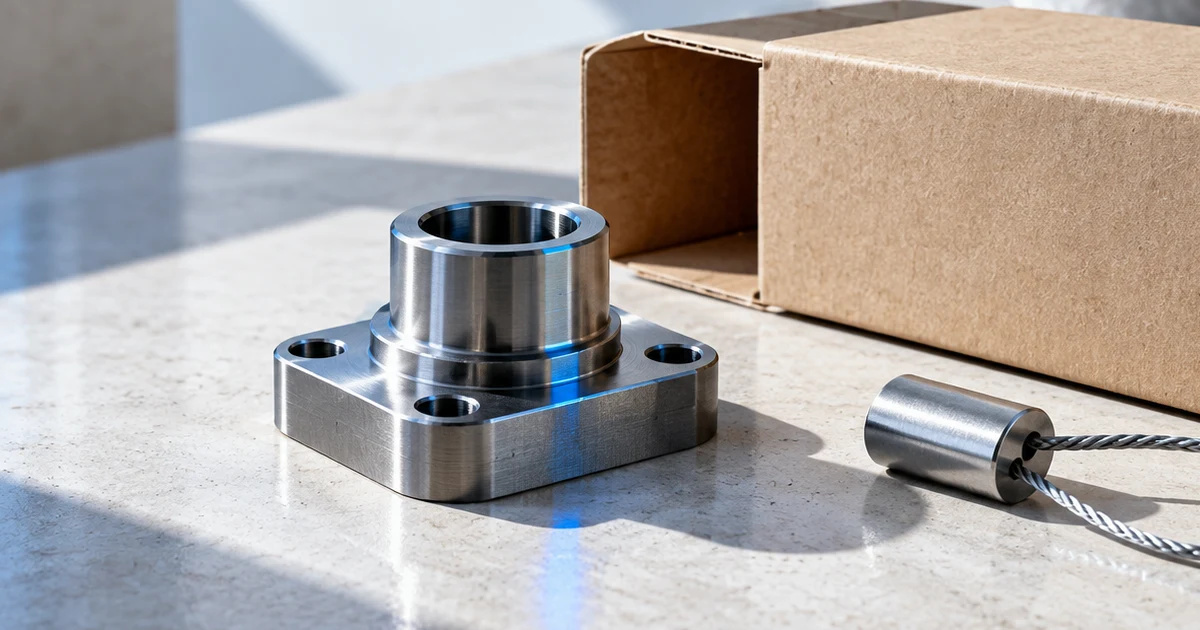
An Estonian company buys a machine component from a supplier outside the EU. The supplier's invoice is only the start of the tax calculation: import duty and transport to the first Estonian destination can affect the import VAT base. The company also needs to know whose name appears as importer on the customs declaration. Without that document, an invoice and a courier receipt are not enough to support an input VAT deduction.
I am Dmitri Schmidt, a certified accountant and CEO of AccRes. In more than 15 years of Estonian accounting work, I have seen import costs land in the wrong period when the purchase invoice is treated as the entire customs file. This example separates the goods cost, import VAT and the deduction. It concerns an ordinary business import released into Estonia; special customs procedures, exemptions and consumer parcels need their own analysis.
Calculate VAT from the import base, not only the supplier invoice
EMTA explains that the taxable value includes the customs value, import duties and costs of delivery to the first destination in Estonia that are not already in the customs value. Transport, insurance, packing and commission can matter. Do not add the same freight charge twice. The applicable customs duty depends on the goods and their origin; this article does not assume a universal duty rate.
Assume the customs value is EUR 1,000, the customs decision states EUR 50 of duty and EUR 100 of transport to the first Estonian destination was not included in the customs value. The import VAT base is EUR 1,150. At the standard 24% rate listed by EMTA, import VAT is EUR 276. These figures are illustrative; use the actual customs declaration and rate for your goods.
| Component | Example | Why it matters |
|---|---|---|
| Customs value | EUR 1,000 | Starting amount |
| Import duty | EUR 50 | Amount in the assumed customs decision |
| Excluded delivery cost | EUR 100 | To the first destination in Estonia |
| Import VAT base | EUR 1,150 | Do not duplicate included costs |
| Import VAT at 24% | EUR 276 | Calculated from the base |
Import duty and import VAT are different charges; a later input VAT deduction does not erase the duty.
Match the customs declaration to the buyer and the goods
EMTA states that input VAT on an import is deducted on the basis of the customs declaration when the imported goods serve taxable supply. Keep the supplier invoice, transport bill, customs declaration and payment evidence under one purchase reference. Compare the importer or consignee, item description, quantity and value before posting the transaction.
If a freight forwarder clears the goods, ask for the declaration and tax calculation, not just its service invoice. A customs agent paying VAT for the company cannot itself deduct that VAT on the company's behalf. If the documents name another consignee, check the legal and factual position before claiming a deduction.
The customs release date matters for the deduction period; an earlier supplier invoice date does not replace it.
Separate customs payment from the input VAT deduction
Without a special authorisation, import VAT is paid under customs rules. EMTA allows an Estonian VAT payer to deduct VAT paid or payable on imported goods used for taxable transactions after customs has released the goods, subject to the usual deduction conditions. If the goods also support exempt activity, the deductible share may be smaller.
In the EUR 276 example, the customs payment and the potential input VAT deduction are two entries with different evidence. Reconcile the customs decision to the ledger; do not post EUR 276 as a second supplier purchase. A later sale of the imported component has its own output VAT treatment.
The import is not an intra-EU acquisition merely because the company is registered for VAT in Estonia.
Use KMD import accounting only with EMTA authorisation
EMTA permits eligible VAT payers to declare import VAT on KMD instead of paying it at customs, with a simultaneous deduction where fully allowed. The company must apply in e-MTA through LUBA and receive authorisation before using this route. Conditions include at least 12 consecutive months of VAT registration, timely returns and no qualifying tax arrears in the prior 12 months.
With a valid permit, the customs declaration uses the prescribed authorisation code and payment method. EMTA fills KMD field 4.1 from the Impulss customs system; the company cannot edit that field itself. Reconcile the amount to the customs data and assess the corresponding input VAT deduction. If the permit is absent, pay under customs rules instead of manually inserting a figure into 4.1.
Full offset is possible only where the imported goods qualify for full input VAT deduction.
I check the importer named in the customs declaration before I book any input VAT. A supplier invoice proves a purchase, but the customs document establishes the import charge and its timing.
For an ordinary non-EU goods import, start with the customs declaration, calculate the full import VAT base and then test the deduction. In the example, EUR 1,150 produces EUR 276 of VAT at 24%. The KMD route is available only after EMTA authorisation; it does not change the underlying import value. See also: VAT declaration in Estonia.
If your company is bringing goods into Estonia, send the supplier invoice and customs calculation through the AccRes contact form. We can reconcile the import with your next VAT return.